NZICC is home to some of Aotearoa New Zealand’s most esteemed artists. The glass artwork by Sara Hughes and the terracotta tile wall by Peata Larkin wrap around the building, making NZICC a striking and distinctive presence on the global stage. Each piece tells a story of our culture and offers a meaningful welcome to all who enter our space.
Iwi Rau / Many Leaves, One Canopy
Sara Hughes, 2025
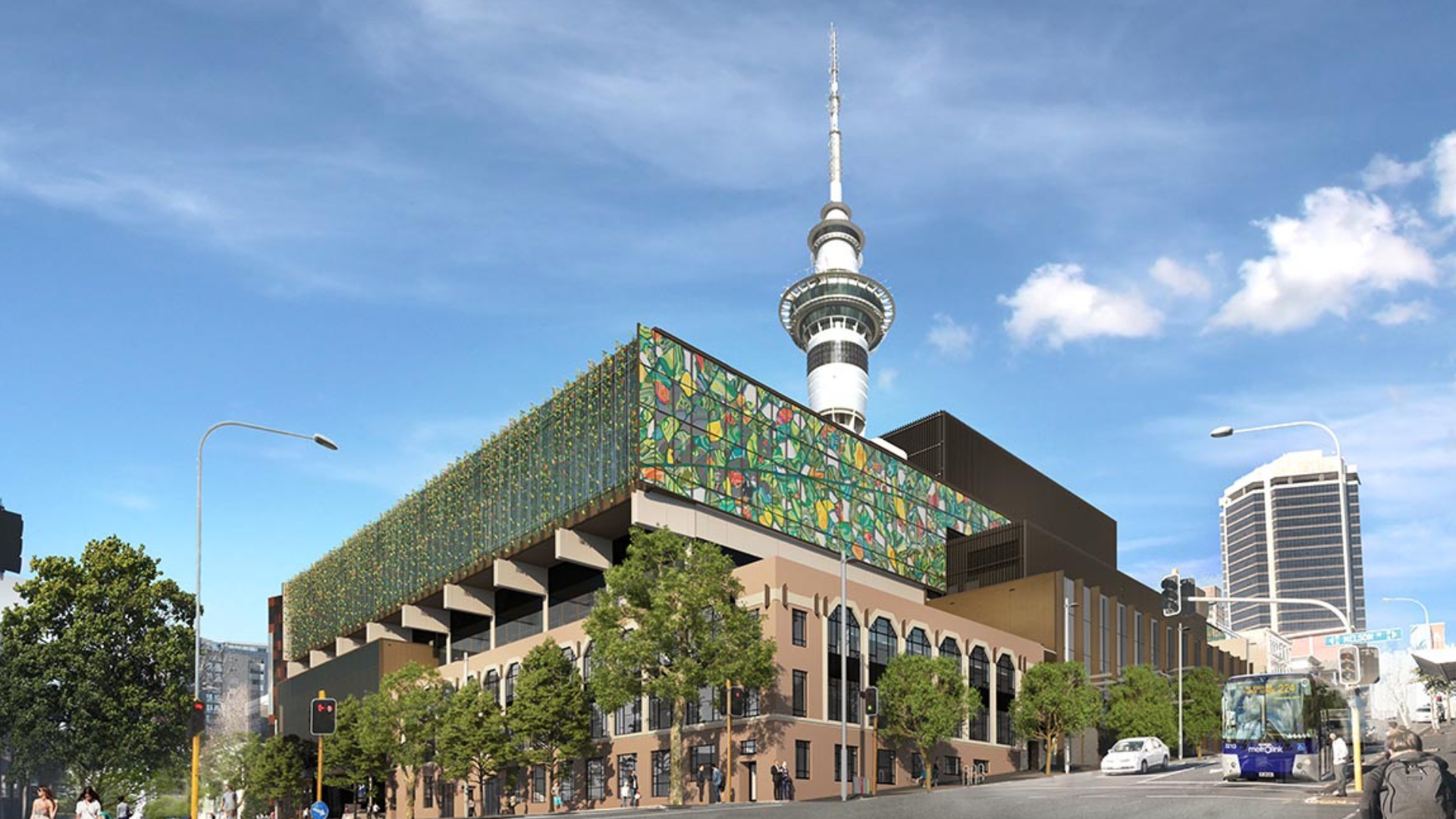
Iwi Rau is a major public artwork by Auckland artist Sara Hughes, commissioned for the New Zealand International Convention Centre. Comprising 475 large glass panels that wrap the building, it transforms the façade into a shimmering canopy of leaves. Layered colours and shifting forms evoke the textures, energy, and rhythms of Aotearoa’s forests. Its name - iwi (people) and rau (leaves), reflects the strength of communities and their connection to the land. Pause, reflect, and experience the presence of the natural world at the heart of the city.
Learn more about Sara Hughes' artworkPekerangi / A Wall of Embrace
Peata Larkin 2025
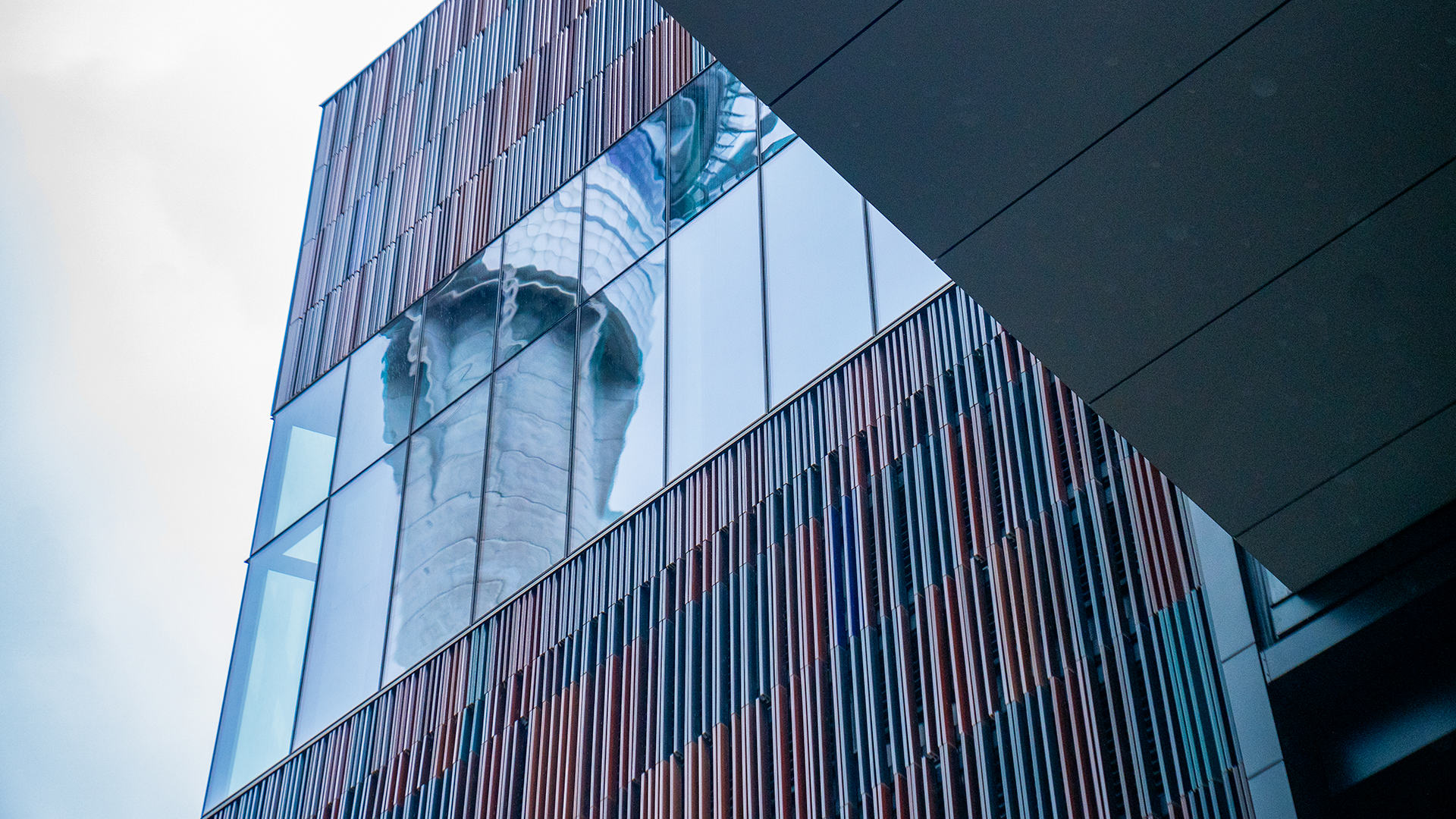
Pekerangi is a major public artwork by Tāmaki Makarau artist Peata Larkin, commissioned for the Spine wall of the New Zealand International Convention Centre.
Pekerangi marks the edge of a pā, the threshold between the outside world and a space of protection within. Peata Larkin’s ceramic artwork wraps along and into the New Zealand International Convention Centre, grounding the building in Tāmaki Makaurau while carrying the living presence of whakapapa. Composed of 13,500 tiles, (3,360 square metres) its patterns trace waterways, forests, and celestial paths, flowing like tides across the façade. Ochre, green, and blue punctuate the surface, creating a space of connection, and guardianship - a wall that holds and welcomes us all.
Te Pekerangi o te Iwi Rau
Sara Hughes / Peata Larkin 2025

Te Pekerangi o te Iwi Rau is a pair of monumental artworks that together wrap the New Zealand International Convention Centre like interwoven korowai, surrounding the building in a continuous gesture of guardianship. The title speaks to an enduring ascent through generations, carrying knowledge, memory, and care forward across centuries.
Peata Larkin’s ceramic artwork, Pekerangi, engages in dialogue with Sara Hughes’ monumental glass work, Iwi Rau, bringing together earth and canopy, texture and light. Hughes, a Pākehā artist from Tāmaki Makaurau, and Larkin, drawing on her Māori whakapapa, bring distinct cultural perspectives, reflecting the layered histories, identities, and relationships of Aotearoa. Seamlessly integrated, the works merge into a unified environment where the rhythms and textures of the forest meet human experience. Te Pekerangi o te Iwi Rau invites visitors to pause, reflect, and witness the interconnection of land, people, and living culture - an expression of collaboration, respect, and an ongoing commitment to the principles of Te Tiriti o Waitangi.
The name Te Pekerangi o te Iwi Rau was gifted through consultation with Ngāti Whātua kaumātua Tautoko Witika.
Whakapiri atu te Whenua
Shane Cotton 1996
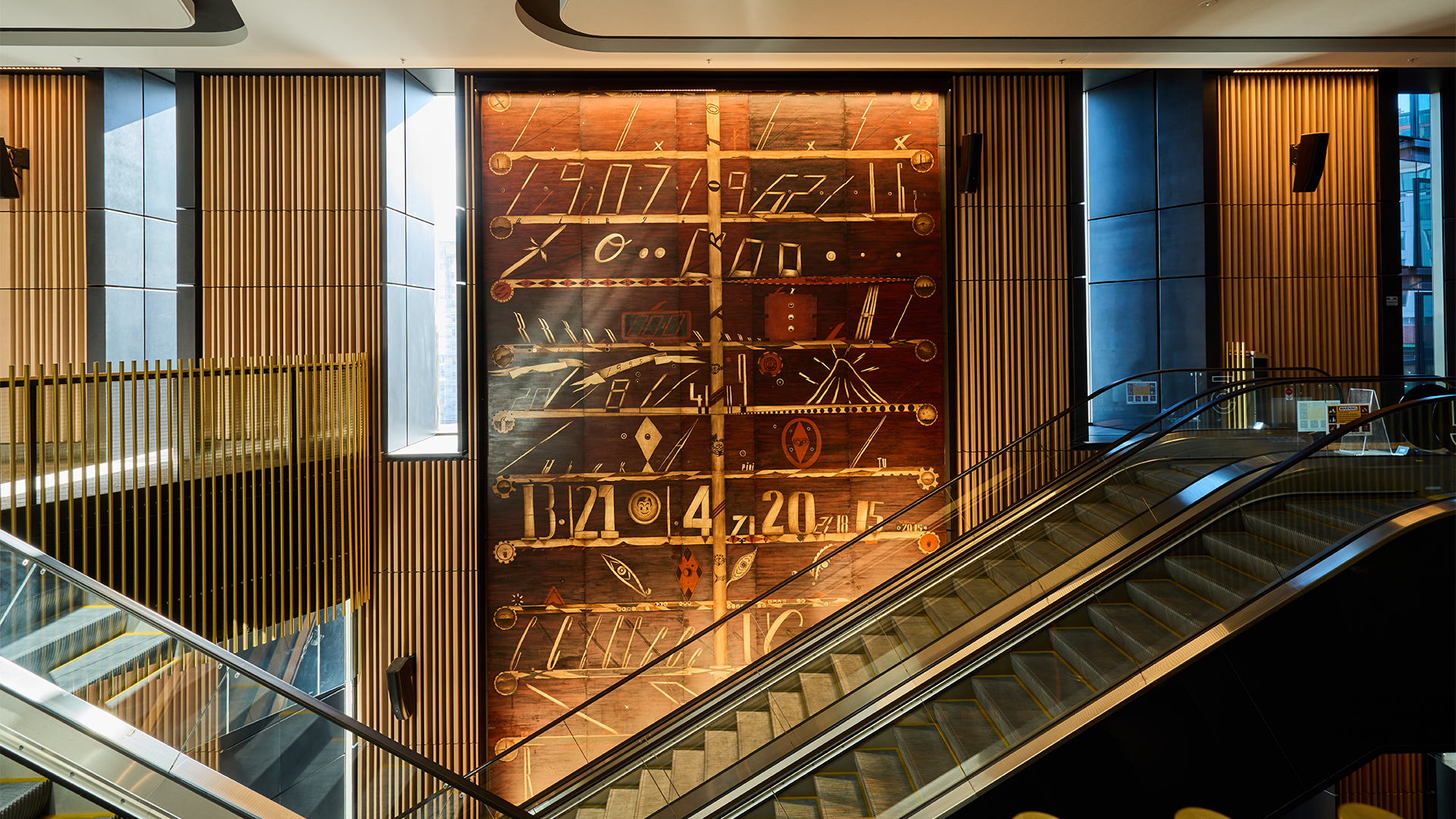
Rising through the atrium from Level 3 to Level 5 is a commanding 15‑metre-high artwork by Shane Cotton (Ngāpuhi, Ngāti Rangi, Ngāti Hine, Te Uri Taniwha), one of Aotearoa New Zealand’s most celebrated contemporary artists.
Originally commissioned by SkyCity Entertainment Group in 1996 and formerly displayed in the SkyCity Atrium, the 35-panel work has been lovingly restored and now resides in its new home at the NZICC.
The title Whakapiri atu te Whenua translates closely to “Hold fast to the land.” It references an exhortation by Te Kooti from the 1870s, during a period when he was pursued around the motu and into Te Urewera. Prophecy was one of his most powerful tools; a source of strength and hope for his iwi followers.
Cotton’s practice explores bicultural identity, Māori spirituality, and the layered impacts of colonisation. His work often weaves Māori iconography with European visual traditions, creating powerful and thought‑provoking pieces that resonate deeply with Aotearoa’s cultural landscape.
Pou Wairua Waka
Lyonel Grant 2025
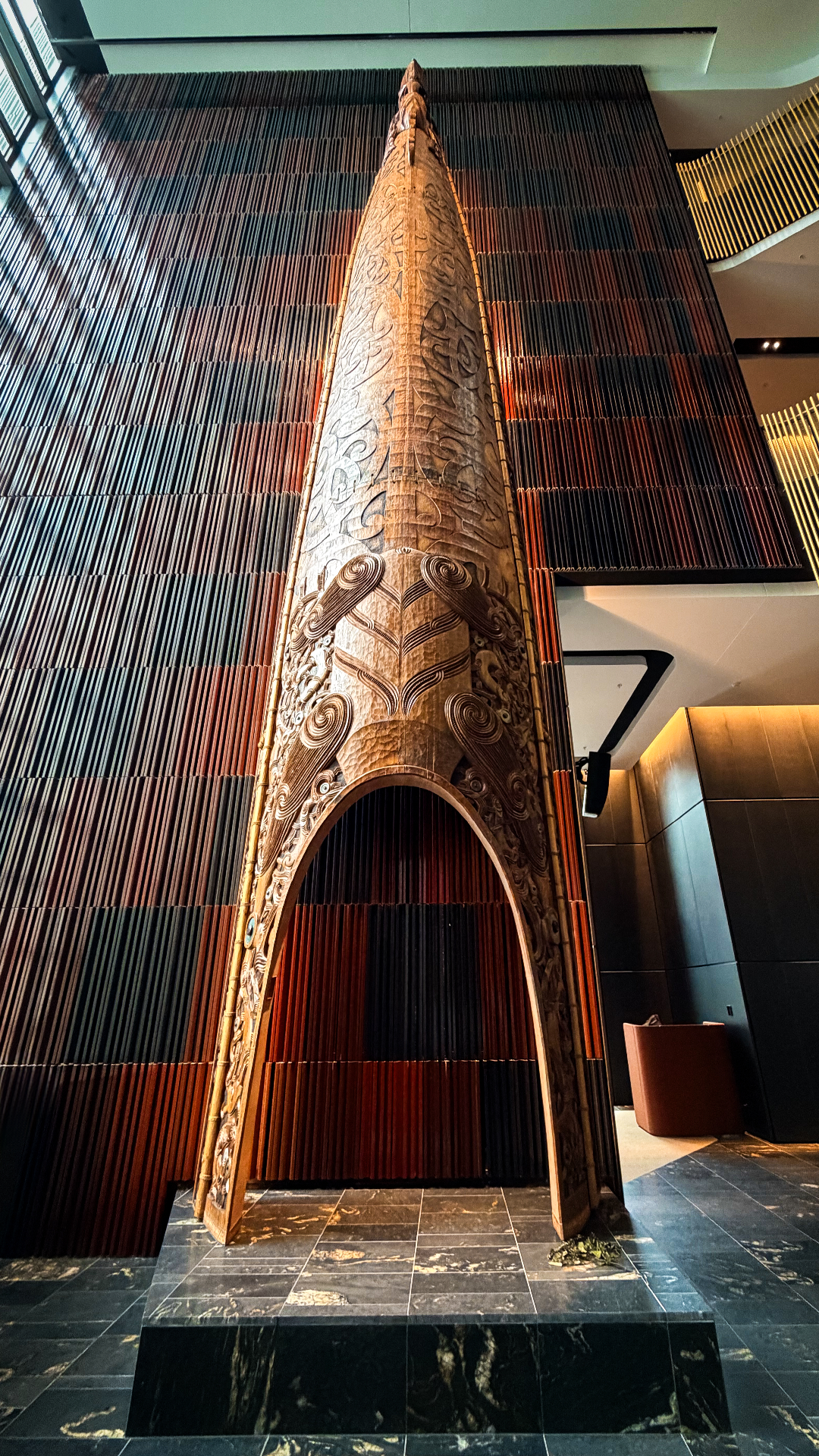
Inside NZICC, Pou Wairua stands as a breathtaking centrepiece — a 17-metre waka carved from kauri by renowned Māori Tohunga Whakairo (Master Carver) Lyonel Grant (Ngāti Pikiao, Te Arawa). Spanning three levels of the atrium, this monumental work commands attention and invites reflection.
Pou Wairua represents Te Wehenga o Ranginui rāua ko Papatūānuku — the separation of Ranginui (sky father) and Papatūānuku (earth mother) by their son Tāne Mahuta, god of the forest. The bow symbolises Ranginui, the hull Papatūānuku, and the central section Tāne, forcefully pushing them apart. Inset pāua shell eyes bring life to this extraordinary piece, which is more than sculpture — it is a spiritual anchor, rooted in whakapapa and storytelling.